Drainage Solutions in Jacksonville, FL
French drains, catch basins, regrading, and dry creek beds for Jacksonville's flat lots and high water table — engineered around where your water actually comes from and where it legally goes.
Jacksonville's #1 Yard Problem, Solved Properly
If we had to name the single most common call we get, it's standing water. Side yards that stay soggy for days. Mulch beds that wash into the driveway. Water lapping at the slab after a normal afternoon storm. Jacksonville's combination of pancake-flat topography, a high water table, and summer deluges makes drainage a design discipline here, not an afterthought. And most of the failed DIY fixes we replace share one flaw: they moved water without understanding where it came from.
Diagnosis before digging
Every drainage project starts with a wet-weather read of your property: we trace flow paths during or right after rain, probe soil saturation, check downspout discharge points, and look at how your lot relates to the street, the easement, and your neighbors' grades. Water obeys gravity and soil — a proper diagnosis tells us whether you need interception (French drain), collection (catch basins), reshaping (regrading), or a combination. Guessing wrong means an expensive trench that doesn't fix the pond.
French drains for soggy ground
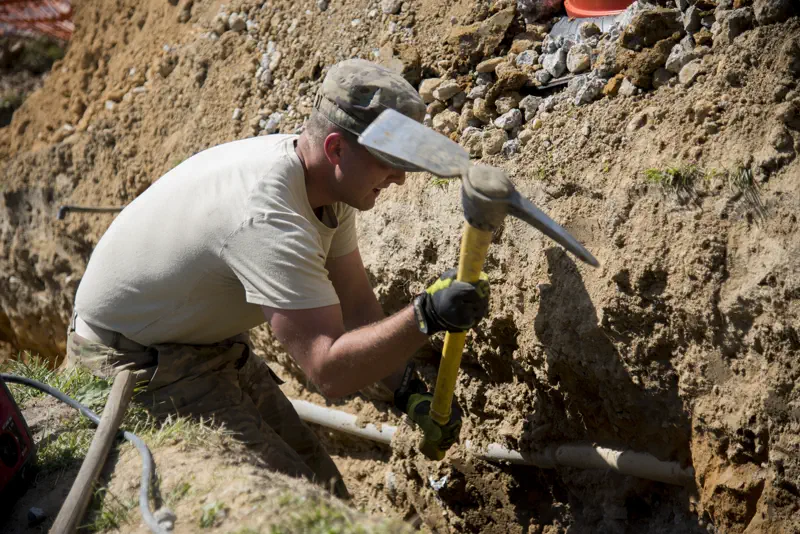
The workhorse for Jacksonville's saturated lawns: a gravel-lined trench with perforated pipe that intercepts shallow groundwater and sheet flow, carrying it to a safe outlet. We bed pipe in washed stone wrapped in filter fabric — skipping the fabric is how drains clog with our fine sand within two years — and we daylight to the street gutter or an approved storm connection wherever the grade allows.
Catch basins and downspout management
A shocking amount of "yard flooding" is really roof water: four downspouts dumping 1,200 gallons onto one corner of the lot during a storm. Catch basins tied to solid-pipe runs capture that concentrated flow at the source and route it away before it ever becomes a yard problem. It's often the highest-ROI drainage dollar you can spend.
Regrading and dry creek beds
When the whole lot's grade is wrong — common on older Orange Park properties and Jacksonville Beach cottages — spot fixes won't cut it. We reshape grade to the 2% fall standard away from structures, and where a swale would look like a ditch, we build it as a dry creek bed: river rock, native plantings, and a feature that reads as landscape design while functioning as infrastructure.
Drainage First, Beauty Second — Then Both
Here's the sequence that actually works: fix the water, then build the landscape on top of dry ground. Sod drowns in standing water. Paver bases fail in saturated soil. Mulch floats away. We bundle drainage with landscape installs constantly — one mobilization, one restored yard, and plantings that go into ground that drains. If your yard ponds after every storm, start with a drainage diagnosis; the pretty stuff comes after the water leaves. Pricing for typical systems is in our Jacksonville cost guide.
Frequently Asked Questions
How much does yard drainage cost in Jacksonville?
French drains typically run $25–$55 per linear foot installed, depending on depth, soil, and discharge routing. A simple 60-foot French drain often lands $2,000–$3,500; full systems with catch basins and regrading run $4,000–$10,000. We diagnose first and quote the fix your yard actually needs — not a one-size system.
Why does my yard flood every time it rains?
Jacksonville's flat terrain, high water table, and clay pockets under the sand mean water has nowhere to go on many lots — especially in low-lying neighborhoods and near the river's tributaries. Add builder grading that slopes toward the house instead of away from it, and every thunderstorm becomes a pond. The fix starts with tracing where water comes from and where it should go.
French drain vs. catch basin — which do I need?
They solve different problems. French drains (gravel trenches with perforated pipe) intercept shallow groundwater and sheet flow across a yard — ideal for soggy lawns. Catch basins with solid pipe move concentrated surface water — downspout discharge, driveway runoff — to a safe outlet. Most Jacksonville drainage projects use both, designed as one system.
Where does the water go?
To the legal outlet: the street gutter, a storm drain connection (with COJ approval where required), or a dry well / infiltration area on large lots. We never just move your water onto your neighbor's property — that's a lawsuit, not a solution.
Will drainage work tear up my whole yard?
Less than you'd think. French drain trenches are typically 12–18 inches wide; we cut sod strips, set them aside, and relay them after backfill. Within a few weeks of growth you can't tell we were there. Regrading projects disturb more, but we restore grade, sod, and beds as part of the job.
Do I need a permit for drainage work?
Most residential drainage work doesn't need a City of Jacksonville permit, but connections to the municipal storm system, work in drainage easements, and significant regrading can. We verify requirements before we dig — and we always call 811 for utility locates.